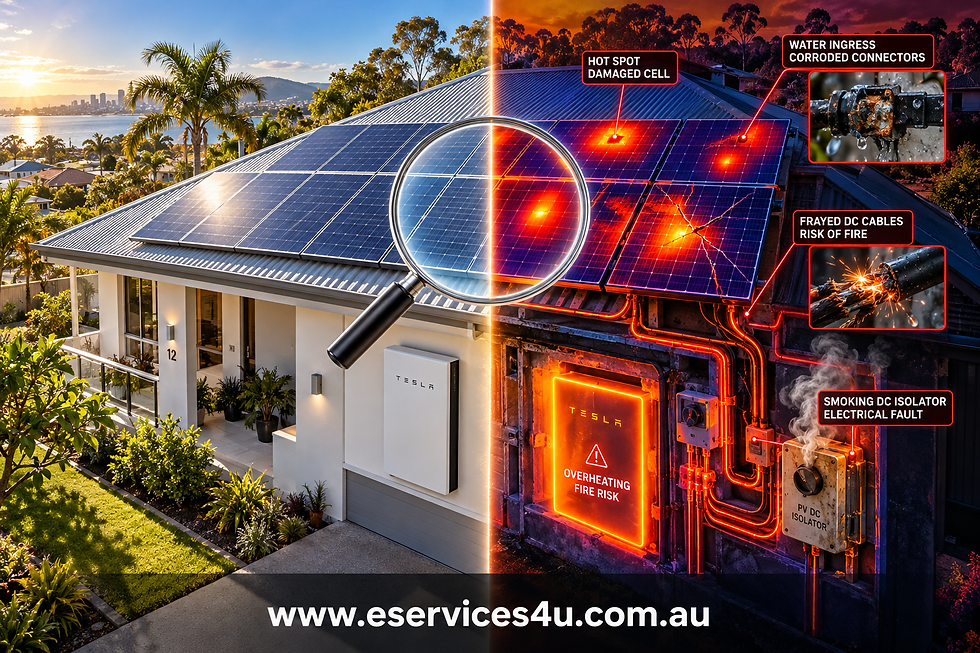
The Rise of the Owner's Engineer: De-risking Australian Commercial Solar Projects

The Australian commercial renewable energy sector is evolving rapidly. With complex grid connection requirements, fluctuating wholesale tariffs, and massive influxes of capital flowing into Battery Energy Storage Systems (BESS), the stakes for deploying commercial clean energy assets have never been higher.
For commercial property managers, industrial operators, and corporate investors, relying solely on an EPC (Engineering, Procurement, and Construction) contractor to self-report on a project's viability is a major financial risk. This is exactly why the role of the Owner’s Engineer has become the most critical asset in the modern renewable project lifecycle.
Whether you are navigating grid integration in Queensland, auditing system designs in Victoria, or managing a national portfolio, here is why independent technical and commercial advisory is no longer optional.

⚡ What is an Owner's Engineer?
An Owner's Engineer acts as the independent, expert representative of the project owner throughout the entire lifecycle of a renewable energy development. They do not sell the hardware, nor do they build the physical array. Their sole mandate is to protect the financial and technical interests of the client.
In a market saturated with aggressive sales tactics and complex technical jargon, the Owner's Engineer serves as a vital bridge between the commercial goals of the investor and the technical realities of the grid.
Core Responsibilities in the Project Lifecycle
Project Phase | The Role of the Owner's Engineer | Strategic Value |
Pre-Feasibility | Auditing preliminary designs using advanced modeling (e.g., OpenSolar validation). | Prevents over-capitalization and ensures projected generation matches reality. |
Design & Engineering | Rigorous verification of technical documentation, including Single Line Diagrams (SLDs) and grid integration schematics. | Guarantees compliance with strict local network operator (DNSP) regulations. |
Procurement & Commercial | Assessing supplier equipment specifications, warranties, and fixed-fee commercial pricing structures. | De-risks procurement delays and secures bankable technology. |
Data & Operations | Implementing back-office data management and BPO strategies for ongoing asset monitoring. | Ensures long-term OPEX tracking and performance reconciliation across large portfolios. |
🏗️ The Cost of Getting It Wrong
The technical complexity of integrating multi-megawatt solar and battery systems into the National Electricity Market (NEM) cannot be overstated. A minor oversight during the design phase can trigger cascading financial losses.
Grid Compliance Failures: A poorly designed Single Line Diagram that fails to meet local distribution network standards can stall a project for months, locking up capital and delaying ROI.
Yield Shortfalls: Overly optimistic shading analysis or incorrect inverter sizing during the initial proposal phase means the asset will never generate the modeled revenue, destroying the project's financial payback period.
Data Fragmentation: For investors managing assets across Australia (or globally), poor data hygiene and a lack of standardized reporting workflows make it impossible to track accurate portfolio performance.
The Reality Check: An EPC contractor's primary goal is to build the project efficiently. An Owner's Engineer's primary goal is to ensure the project actually performs safely and profitably for the next 25 years.
📍 Navigating the Technical and Commercial Divide
Modern renewable energy consulting requires more than just electrical engineering expertise; it requires deep commercial acumen. The most successful projects are backed by advisory services that seamlessly blend both disciplines.
Technical Advisory: Ensures that the physical electrons flow safely. This includes auditing electrical design reviews, ensuring grid connection compliance, and verifying that the chosen battery chemistry is appropriate for the specific site load profile.
Commercial Advisory: Ensures the project makes financial sense. This involves navigating complex PPA (Power Purchase Agreement) structures, auditing fixed-fee pricing models, and establishing Knowledge Process Outsourcing (KPO) frameworks to streamline high-volume commercial workflows.
By securing an independent technical and commercial advisor, businesses can scale their clean energy portfolios with absolute confidence, knowing every metric—from the initial spreadsheet model to the final grid connection—has been rigorously verified.
🚀 Protect Your Next Clean Energy Investment
Deploying a commercial solar or battery asset is a multi-decade financial commitment. You cannot afford to rely on guesswork or heavily biased vendor proposals.
At EServices4U, we act as your dedicated Owner's Engineer, providing elite technical and commercial advisory across Australia. From rigorous OpenSolar design verification and detailed Single Line Diagram audits to high-level BPO data management, we bring independent transparency to your clean energy projects. We operate on transparent, fixed-fee pricing tables, ensuring you get world-class engineering review services without hidden consulting costs.
De-risk your investments and scale your renewable portfolio with precision.
🌐 Website: eservices4u.com.au
📧 Email: growthpartner@eservices4u.com.au