
Queensland Pubs, Clubs and Sports Facilities Solar: Daytime Loads, Cold Rooms and Evening Peaks

A Queensland pub, RSL club or sports club is not a house with a bigger roof. It is a commercial kitchen, a cold store, a function venue, a gaming room and a car park, all sharing one connection — and all wanting power at different times of day. That mix is why a quote copied from a residential job, or a warehouse with a flat daytime load, can miss the point.
Pubs clubs solar Queensland projects live or die on the load profile. A club that runs cold rooms and cellar cooling around the clock, fires up kitchens at lunch and dinner, cools a big function space on a humid Brisbane afternoon, and fills up again for evening trading has a very different shape from a nine-to-five office. Solar generates in the middle of the day; much of a club's heaviest use lands in the evening, after the sun has dropped. That gap is the design question: how much solar to install, whether a battery earns its place covering the evening peak, and what tariff and export arrangement makes the numbers work.
This guide walks through that question for Queensland pubs, RSL and community clubs, sports clubs and grounds, and larger sporting facilities — the venues where RSL solar Queensland projects and community club solar panels Queensland inquiries most often start. It covers daytime versus evening loads, refrigeration and the cold chain, demand charges, battery sizing for the evening peak, solar carports, Energex and Ergon Energy connection and export rules, what to check in an EPC tender, and staged rollout across a club group. It is written for a club manager, board member or facilities manager who must approve a spend and live with the result. EServices4U is based in Queensland and serves clients Australia-wide. Where a figure, rebate or rule is time-sensitive, the guide says so — confirm it on your own connection approval or quote before relying on it.

Why clubs are a different solar job
Start with what makes a club different from the two buildings solar installers quote most often — houses and warehouses. A house has a morning and evening peak, a midday trough, and a roof that is usually the constraint. A warehouse has a flat daytime load and a big empty roof, so the design is often as simple as filling the roof and exporting the rest. A club has neither shape.
A typical Queensland club runs a base load all day and all night: cold rooms, cellar cooling, refrigeration cabinets, security and IT systems, and in many venues gaming machines on standby. Kitchens add a sharp load at lunch and again at dinner. Air conditioning climbs through a hot, humid afternoon and stays high into the evening as the bistro, bar and function rooms fill.
That means a club can have strong daytime solar self-consumption — cold rooms and kitchens soak up midday generation — and still face a large evening peak that solar alone cannot touch. It also means the roof is rarely the whole story. Many clubs have a large, flat or low-pitch roof, but plant rooms, parapets, air-conditioning condensers, exhausts and skylights compete for space, and a car park may be the largest unshaded area on the site. A good design starts from interval meter data, not from a roof measurement.
The daytime load: what solar actually feeds
Between about 9 am and 3 pm on a Queensland day, a club's load is already substantial, even before the lunch rush. Cold rooms and cellar cooling cycle continuously. Kitchens prep for lunch. Air conditioning works against the heat building up in a large, often poorly insulated envelope. Office, administration and cleaning loads run. In a sports club, the canteen fridges, cool rooms and ice machines run all day whether or not anyone is at the bar.
That steady daytime base load is good news for solar. Every kilowatt-hour generated and used on site avoids buying a kilowatt-hour from the grid at the club's retail rate, which is generally worth more than exporting it at a feed-in rate. The higher the proportion of solar generation consumed on site — the self-consumption rate — the stronger the case usually is. But a club should test three things before assuming high self-consumption: the shape of the load by day and by season, and what is really running at midday.
Check weekday, weekend and seasonal shapes separately: a club quiet on Monday and packed on Friday and Saturday will have very different self-consumption on each day, and Queensland summers bring higher air-conditioning load and longer solar days at the same time. A system sized to a Saturday will export heavily on a Monday, and a design that only models summer will overstate annual self-consumption. Ask for self-consumption by day of the week and modelling across a full year, or representative weeks from different seasons. Also check what is really running at midday: some clubs assume the kitchen is the big midday load, only to find it closed between services and the real midday load is refrigeration and air conditioning alone.
For sports club solar Brisbane buyers, the same logic applies at a smaller scale. A suburban sports club with a canteen, cool room and field lighting may have a modest daytime load — perhaps only refrigeration and a small office — and a large evening load when training runs under lights. A large array can then export most of its midday output, so the system's value depends heavily on the export arrangement and the feed-in rate. That is not a reason to rule solar out, but it is a reason to size carefully and check the export rules first.
The evening peak: where the money goes
The evening is where most Queensland clubs spend most of their electricity money. Dinner service, the bar at its busiest, function rooms in use, gaming areas active, air conditioning still working hard on a warm night, and sports field lighting drawing a large, steady load for hours. Solar output at 7 pm in Queensland is, for practical purposes, zero for most of the year. So the evening peak is a grid or battery question, not a solar question — and that distinction should be front and centre in any proposal.
Two costs live in the evening peak. The first is the energy itself: the kilowatt-hours consumed between roughly 4 pm and 9 pm, often bought at a higher time-of-use or demand tariff rate than overnight energy. The second, and often the larger, is the demand charge, based on the highest demand the site draws in a defined window, usually measured over a half-hour interval. A single half-hour of very high demand — a hot Friday night with kitchen, air conditioning, function room and field lights all at full load — can set the demand charge for the whole month.
This is the real job of a battery in a club: not to store all of the day's solar, but to shave the evening peak. A battery charged from midday solar, or from the grid overnight if the tariff allows it, can discharge through the evening peak and hold the site's grid demand below the level that triggers the highest demand charge. The value depends on the tariff, the size and duration of the peak, and how often it occurs. A battery shaving a peak that happens twice a month is worth less than one shaving a peak every night — and only interval data shows which one you have.
Cold rooms, cellar cooling and the cold chain
Refrigeration is the quiet backbone of a club's electricity bill, and it deserves its own design attention. Cold rooms, freezer rooms, cellar cooling, bottle shops, kitchen refrigeration, bar fridges and ice machines run twenty-four hours a day, and they are sensitive to both power quality and power interruption. A club that loses a cold room for a few hours on a hot Queensland day can lose stock worth far more than the electricity saved that day.
From a solar design point of view, refrigeration has three features that matter:
It is a steady, predictable load: cold rooms cycle, but across a day they draw a fairly constant average. That makes them ideal solar load: they are there at midday when the sun is shining, and they keep the self-consumption rate up. A design that treats refrigeration as a flat base load is usually on safe ground, provided the load has been measured rather than guessed.
It is temperature-critical: solar and battery systems must not compromise refrigeration. Any load-control scheme that sheds refrigeration load to shave a peak needs temperature limits and maximum off-times, plus a clear alarm if a cold room drifts out of range. Any backup arrangement must also state plainly whether refrigeration is on the backed-up circuit and for how long the battery can sustain it. Verify both points in writing before accepting a design that touches refrigeration controls.
Demand charges, tariffs and the October 2026 AER decision
Many Queensland clubs are on a commercial tariff that includes a demand component, and for those clubs the demand charge is often the single largest lever a solar-and-battery system can pull. Understanding the tariff is therefore not a detail to leave to the installer — it is the first step in the business case.
A demand charge is typically based on the maximum demand recorded in a billing period, measured over a defined interval, often thirty minutes, and sometimes only within defined peak windows. Some tariffs charge for the single highest peak in the month; others average peaks across several days. The exact structure varies by retailer and network tariff, and it can change. Get the tariff in writing from the retailer, the network tariff from the distributor's published schedule, and ask the designer to model savings against that tariff, not a generic flat rate.
There is a dated development Queensland club buyers should know about. On 30 October 2026, the Australian Energy Regulator (AER) handed down its final decision on the Energex and Ergon Energy network tariff proposals and refused the distributors' requests to remove optional demand tariffs. The optional demand tariffs remain available. That matters because a club considering a demand tariff — often as part of a solar-and-battery plan — still has that option, and a club already on one has not had it withdrawn. It does not mean a demand tariff is right for every club: model the choice on your own load data, and verify your current network tariff and demand options with your retailer and the distributor's published schedule.
A related Queensland development is worth watching. It is reported that Energex has been running a Dynamic Business Tariff Trial, with notified peak events priced at $2.16/kWh, reported on 9 November 2026. That is a trial, not a standard tariff, and eligibility, notice periods, event frequency and how a battery or load control responds need confirming for any specific site. But the direction is clear: Queensland business tariffs increasingly reward sites that can reduce demand when the network asks. A club with a battery and controllable load is better placed for that world than a club with solar alone. Ask your retailer and Energex whether your site is eligible before assuming any value from it.
Sizing solar for a club: roof, load and export
Sizing a club solar system is a three-way balance between roof area, daytime load and export value. Get any one of the three wrong and the business case weakens.
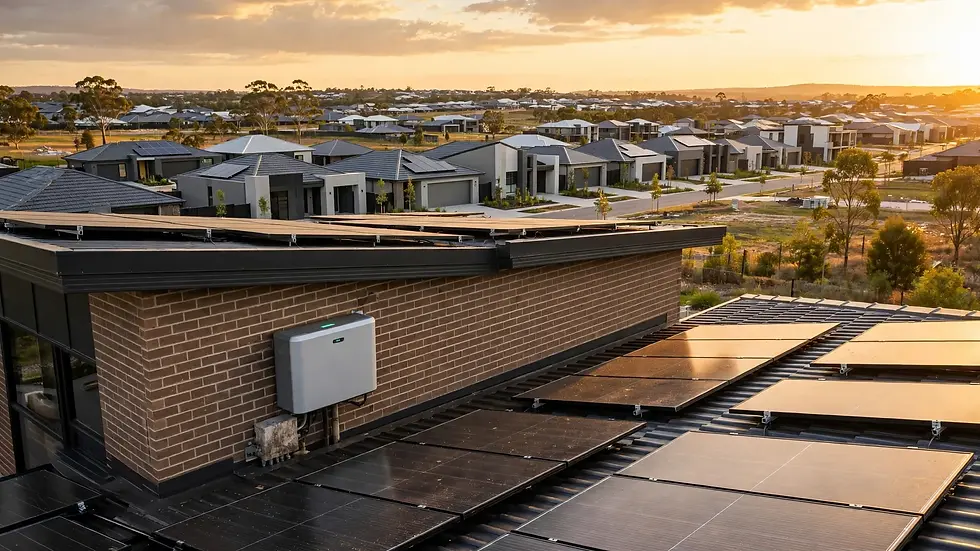
Roof: many Queensland clubs have a large, low-pitch metal roof that suits solar well, but the usable area is often less than the roof area. Air-conditioning plant, exhaust fans, skylights, parapets, access walkways and maintenance clearances all take space: a roof that looks like it holds 200 kW may in practice hold 120 kW. Structural capacity also matters — an older club roof may need an engineering check before it carries panels, racking and the wind loads that apply in cyclone-prone parts of Queensland. Verify the structural assessment and wind-region rating are included in the design.
Load: as above, the daytime load sets how much solar is used on site. A system that generates far more than the daytime load will export the surplus, and the value of that surplus depends on the feed-in rate and the export limit. There is nothing wrong with exporting — but a design that relies on export revenue to make the numbers work should say so openly, and should show what happens to the return if the feed-in rate falls or the export limit is lower than assumed.
Export: Queensland clubs connect through Energex in South East Queensland or Ergon Energy in regional Queensland, and the export arrangement depends on system size and connection. Small systems may export under a basic connection offer; larger systems, and systems with batteries, usually need a negotiated connection and may face export limits or dynamic export controls. The connection application settles this — not the sales proposal. Verify the export limit, any dynamic export arrangement, and any export-limiting device requirement on the connection approval itself.
Club type | Typical daytime base load driver | Evening peak driver | Solar self-consumption tendency |
Pub / hotel-style club (bistro, bar, gaming) | Cold rooms, cellar cooling, air conditioning | Kitchen, bar, gaming, function rooms | High at midday; evening peak needs battery or tariff |
RSL / community club (functions, dining) | Refrigeration, air conditioning, office | Functions, dining, bar, gaming | High on function days; variable across the week |
Sports club / grounds (canteen, change rooms) | Canteen refrigeration, cool rooms | Field lighting, canteen, hot water | Often lower at midday; evening lighting dominates |
Stadium / large sports facility | Refrigeration, air conditioning, plant | Event lighting, catering, air conditioning | High on event days; very low on non-event days |
Battery sizing for the evening peak
A battery for a club is a peak-shaving and tariff tool first, and a solar-storage tool second. That ordering changes how it should be sized and specified.
Size from the peak, not from the roof: the starting point for any club solar battery is the evening peak in kilowatts and its duration. If the peak is 40 kW for three hours, the battery must discharge at 40 kW and hold enough usable energy — roughly 120 kWh before efficiency and reserve allowances — to cover it. If the peak is 80 kW for two hours, power rating matters more than energy capacity. Ask the designer to show the peak-shaving target, continuous discharge power, usable energy, and the state-of-charge window relied on, and verify the continuous power rating at the site's temperature conditions.
Allow for reserves and degradation: a battery cycled deeply every night will degrade faster than one cycled shallowly, and a battery held at full charge waiting for a peak that never comes is not earning its keep. The design should state the assumed depth of discharge, the reserve kept for backup if backup is in scope, and the expected capacity after a stated number of years or cycles. Verify the warranty terms — throughput or cycle limits, capacity retention, and what voids the warranty — against the proposed cycling pattern.
Decide what backup, if any, is in scope: many clubs ask whether the battery can keep the club running in an outage. Usually it can keep some things running — refrigeration, emergency lighting, point-of-sale, perhaps a limited kitchen load — for a limited time, but not the whole club at full load. Backup needs a separate design: a backed-up loads board, a changeover arrangement, and a clear statement of which loads are backed up and for how long. If backup is not in scope, the proposal should say so. Do not assume a battery provides backup just because it is on site.
Check the battery's interaction with export control: a battery charging from solar at midday can reduce export, which helps where export is limited or poorly paid, and one charging from the grid overnight can help where an off-peak rate is available. But a battery charging at the wrong time — for example, from the grid during a peak window — can increase costs. The control strategy should be written down: when the battery charges, from what source, when it discharges, and what happens when the peak is higher or lower than expected. Verify the strategy is configurable and the club can see what the battery did each day.
Fire, safety and placement: batteries in a club need to be sited with fire separation, ventilation, access for emergency services and the applicable standards in mind. A battery room next to a kitchen or a cellar, or one that affects a function room's egress, needs a specific safety review. Verify the battery location, fire separation, signage and emergency procedures are covered in the design, and confirm the applicable standards with the designer and the certifier.
Solar carports and shade over car parks
For many Queensland clubs, the car park is the largest open area on the site, and a solar carport — panels mounted on a shade structure over parking bays — can do two jobs at once: generate electricity and shade cars in a hot climate. That dual benefit is real, and it is also the reason carports need careful assessment rather than a quick add-on to a roof quote.
The case for carports: a carport adds generation capacity where the roof is full, shaded or structurally limited. It shades vehicles, which members and guests notice on a 35-degree Brisbane afternoon, and it can be paired with electric-vehicle charging bays if the club is considering that. For a club whose daytime load is already high, carport generation is consumed on site in the same way as roof generation.
The costs and constraints: a carport is a structure first and a solar array second. It needs footings, steelwork, drainage, lighting, and compliance with car-park layout and accessibility requirements. It costs materially more per kilowatt than roof-mounted solar, and it can complicate stormwater, vehicle movement and emergency access. The business case should compare the carport on its full installed cost per kilowatt, including structure, and show the shade value separately, so the board can see whether shade or generation is carrying the case. Before approving one, confirm structural and wind design, footings and drainage, whether a development or building approval is needed, construction staging and bay closures, clearances for buses and delivery vehicles, and maintenance.
Energex and Ergon connection and export rules
A club solar system in Queensland connects through Energex if the site is in South East Queensland, or Ergon Energy if it is in regional Queensland. The distributor — not the retailer, and not the installer — approves the connection, sets the export limit, and decides whether the system needs a basic or a negotiated connection. That approval is the single most important document in the project, and it should be obtained before the club signs a construction contract, not after.
For smaller systems, the connection may be straightforward, with a standard export arrangement. For larger club systems — and most club systems are larger than a residential system — the distributor will usually want the inverter capacity, export limit, battery arrangement, and whether the system can be controlled or curtailed. Larger systems may face zero-export or limited-export requirements, dynamic or flexible export arrangements, or specific protection and control equipment. Do not assume the club can export all surplus generation at a feed-in rate: verify the approved export capacity and any curtailment arrangement on the connection approval, and model revenue on that figure.
Confirm three points in writing before construction. Inverter capacity: the connection approval states the approved inverter capacity, and the tender's inverter schedule must match it, including any battery inverter. Existing site capacity: the main switchboard, busbar rating and service capacity need checking, and any required board upgrade should be in the quote, not discovered on site. Metering and monitoring: allow for import, export and generation metering, with monitoring the club can access showing generation, consumption, export, battery state of charge and demand in one place.
Dated updates: what changed for larger club systems in late 2026
Small-scale scheme expansion — 1 October 2026: the Federal Small-scale Renewable Energy Scheme was expanded on 1 October 2026 so eligible systems from 100 kW to 1 MW can earn small-scale technology certificates (STCs). That matters for clubs, because many club systems sit in that band — too big for the old small-scale scheme and previously reliant on the large-scale scheme instead. However, as at 9 November 2026, Clean Energy Regulator STC applications for the mid-scale band were still not open, and are expected to open in mid-to-late November 2026. A club signing now should not assume the STC value is locked in: ask the tenderer how the STC value in the quote is calculated, what happens if the window or eligibility rules change, and who carries the risk if the certificates cannot be claimed as assumed. Verify the position on the quote and with the Clean Energy Regulator's current guidance.
STC deeming changes — 1 January 2027: from 1 January 2027, the STC deeming period for small-scale solar drops from five years to four years, and the battery STC factor drops from 6.8 to 5.7, according to published guide figures. The certificate value available for a given system is therefore scheduled to fall at the start of 2027: a club installing before that date may claim under the current deeming, and one installing after it will claim less, all else being equal. That is a timing factor, not a reason to rush a poor design — a rushed job that oversizes the array or undersizes the battery will cost more over its life than the deeming difference saves. Any proposal quoting an STC value should state which deeming period it relies on and what the value would be under the 1 January 2027 figures. Check the figures on your own quote.
Dynamic business tariffs — reported 9 November 2026: it is reported that Energex has been running a Dynamic Business Tariff Trial, with notified peak events priced at $2.16/kWh, reported on 9 November 2026. This is a trial, and eligibility, notice periods and event frequency need confirming for any specific club. The point for a board is the direction: network pricing is moving toward rewarding sites that can cut demand on notice. A club with a battery, controllable load and good monitoring is positioned for that future; a club with solar alone is less so. Ask your retailer whether any dynamic tariff or trial applies to your site before assuming any value from it.
What to check in an EPC tender
An EPC (engineering, procurement and construction) tender for a club solar-and-battery project is a construction contract, not a product purchase, and it should be read that way. The cheapest price per watt is not the best value if the design is wrong, the warranty is weak, or the performance is not guaranteed. The checks below are the minimum a club board should apply before awarding a tender. For a larger project, an independent review of the tender before signing is a modest cost against a six-figure spend.
Design basis: state the interval data, design load profile, self-consumption by day type and season, export limit and tariff modelled — and verify the data is the club's own, the export limit matches the connection approval, and the tariff is the club's actual tariff. Equipment: name panel, inverter and battery make and model with datasheets and warranty terms, and verify approvals and that warranty cycling limits match the proposed use. Performance: state expected annual generation and self-consumption and any guarantee, and verify how it is measured and what happens if the system underperforms. Electrical and structural scope: include the switchboard assessment and any upgrade, cable routes, protection, metering, monitoring and structural assessment, with no excluded items to appear later as variations. Safety and compliance: name the applicable standards, the certifier, and the battery siting, signage and emergency documentation. Commercial terms: state the payment schedule tied to verifiable milestones, the defects liability period, the maintenance offer, and who owns the monitoring data and the STC claim.
Staged rollout across a club group
Many Queensland clubs belong to a group — several venues under one board, or a club with a main venue and a separate sports ground, bowling green or golf course. For a group, staging the rollout is usually smarter than doing every site at once. A staged approach lets the group learn from the first site, refine the design, and spread the capital spend.
Stage one — the best site, done properly: pick the site with the strongest combination of daytime load, roof or carport capacity, and tariff opportunity, and do it to a high standard, with full interval-data design, proper metering and monitoring, and an independent review of the tender. Treat stage one as the template: the design, tender documents and monitoring setup should be reusable for the other sites.
Stage two — the next sites, with lessons applied: use the first site's actual performance — real self-consumption, real evening-peak shaving, real export — to size the next sites. If the first battery shaved the peak by less than modelled, size the next battery differently; if the first site's export was curtailed more than expected, revise the next site's export assumption. Verify stage-two designs against stage-one actuals, not the original sales model.
Stage three — carports, EV charging and demand response: once the roof systems are proven, the group can consider carports where the shade value justifies the cost, EV charging for members and guests, and demand-response or dynamic-tariff arrangements where available.
How This Works for Both Sides
A good club solar project works for the club and for the contractor — and a proposal that only works for one side is a warning sign.
For the club: the value is lower grid energy use in the daytime, a smaller evening peak where a battery is justified, and a clearer picture of energy costs through proper metering and monitoring. The club also gains a visible investment in the venue and, where the design is right, a system that keeps working for twenty years or more. The club's side of the bargain is to provide good data, make timely decisions on tariff and connection, and maintain the system as specified.
For the contractor: the value is a well-defined scope, a client that has provided interval data and a clear brief, and a project that can be delivered without variations caused by missing information. A contractor asked to design from real data, with a proper connection approval and a clear performance expectation, can price the job properly and stand behind it.
For both sides: the shared interest is a design independently checked before construction, a contract with clear milestones and a measurable performance expectation, and monitoring both sides can see. That avoids the two most common disappointments: a system that generates less than promised, and a system that generates as promised but saves less than expected because the tariff, export limit or load shape was wrong. If a tenderer resists an independent review, ask why — a sound design has nothing to lose from a second pair of eyes.
Frequently asked questions
How much solar does a Queensland pub or club need?
There is no standard size. A small sports club might need a system in the tens of kilowatts; a large RSL or pub with a big bistro, function rooms and gaming areas might need several hundred kilowatts. The right size comes from the club's daytime load, the usable roof or carport area, and the export arrangement.
Will solar cover our evening peak?
No — solar output in the evening is effectively zero for most of the year. The evening peak needs a battery, a tariff change, load management, or a combination of the three. A battery can shave the peak if sized to the peak's power and duration and if the tariff rewards peak shaving. Ask the designer to show the peak, the battery discharge, and the demand-charge saving as three separate numbers.
Do we need a battery, or is solar alone enough?
It depends on the load shape and the tariff. A club with a high daytime load and a modest evening peak may do well with solar alone. A club with a large evening peak and a demand charge will usually need a battery to capture the full value. A club with a low daytime load and a large evening peak — common for sports grounds — may find the battery the more important investment. Model both options on your own data.
What is the STC position for a club system between 100 kW and 1 MW?
The Federal Small-scale Renewable Energy Scheme was expanded on 1 October 2026 so eligible systems from 100 kW to 1 MW can earn STCs, but Clean Energy Regulator STC applications for the mid-scale band were still not open as at 9 November 2026 and are expected to open in mid-to-late November 2026. Confirm the current position with the Clean Energy Regulator's published guidance and on your own quote, and ask the tenderer who carries the risk if the claim cannot be made as assumed.
Will the 1 January 2027 STC deeming change affect our project?
From 1 January 2027, the STC deeming period for small-scale solar drops from five years to four years and the battery STC factor drops from 6.8 to 5.7, according to published guide figures. Ask any tenderer to state which deeming period their STC figure relies on, and what the figure would be under the 1 January 2027 settings, so the board can see the timing effect clearly.
Can we put solar on a carport over our car park?
Usually yes, subject to structural design, local government approval, and the electrical design. A carport costs more per kilowatt than roof solar because of the structure, so the business case should show the structure cost separately and attribute a value to the shade. Check height, clearances, drainage and construction staging before approving one.
What if our club is in regional Queensland on Ergon Energy?
The design principles are the same, but the connection, export and tariff details differ. Ergon Energy's network covers regional Queensland, and the connection process, export limits and available tariffs should be confirmed with Ergon Energy and your retailer for your specific site. Regional clubs should also check structural and wind-rating requirements for their location, and installer and maintenance availability in the region.
Get an independent check before you sign
Solar for a Queensland pub, club or sports facility can be a strong investment — but only if the design matches the club's real load shape, the tariff and export rules are modelled honestly, and the tender is read as a construction contract. A board that approves a system on a panel count and a payback promise, without seeing the interval data, the connection approval and the battery's peak-shaving numbers, is taking an avoidable risk.
EServices4U provides independent solar and electrical engineering advice for Queensland and Australian clubs, venues and businesses. We do not sell solar installations and we do not receive installer commissions, so our reviews are independent of any tenderer. We are based in Queensland and serve clients Australia-wide.
Start with a free 15-minute consultation to talk through your tender, system, building, or project and find out which fixed-fee review fits, if any. Call/WhatsApp 0480 001 498 or email growthpartner@eservices4u.com.au. No obligation, and it does not include a written report.
Residential quote review — from $149: a fixed-fee independent review of a residential solar or battery quote, for club managers or board members who want the same rigour applied to a home system. See packages and pricing.
Solar & battery feasibility — from $299: an independent assessment of whether solar and batteries suit your site, including load-shape, tariff and export considerations, before you go to tender.
Home Owner's Engineer — from $599: independent engineering support for a residential project, from design review through to installation checks. See Owner's Engineer services.
Commercial Infrastructure Assessment / RPEQ & RPEV SLD Sign-Off — from $495: an independent commercial assessment, including single-line diagram review and sign-off where applicable, for club, commercial and industrial projects. See packages and pricing and meet the team.
To start, visit the EServices4U home page or request a quote review, or call/WhatsApp 0480 001 498 or email growthpartner@eservices4u.com.au. Bring your interval data, your connection approval and your tender — an independent check before signing is the cheapest insurance a club can buy.


Comments