Mastering the DC-Coupled Frontier: Trina Storage Secures 81.5 MW / 6.9-Hour BESS for Western Australia’s Waroona Hybrid Project

Utility-scale storage in Western Australia is breaking away from conventional design templates. Trina Storage, the grid-scale energy storage division of Trinasolar, has been officially awarded the battery supply contract for Stage One of Frontier Energy’s Waroona Renewable Energy Project.
Located roughly 120 kilometres south of Perth in the Peel region, Waroona Stage One pairs a 132 MWdc solar photovoltaic farm with an 81.5 MW / 6.9-hour Battery Energy Storage System (BESS)—delivering approximately 562 Megawatt-hours (MWh) of dispatchable capacity.
With commercial operations targeted for 2028, the project represents one of the largest solar-storage hybrid developments entering Western Australia’s standalone South West Interconnected System (SWIS). More importantly, it marks a significant engineering milestone: adopting an integrated DC-coupled topology designed to capture solar clipping and maximize peak evening capacity credits.

⚡ DC-Coupled vs. AC-Coupled Architecture: The Engineering Dilemma
The defining technical choice of Waroona Stage One is its DC-coupled architecture.
While the overwhelming majority of large-scale Australian battery projects deploy AC-coupled systems—where the solar farm and the battery operate through separate, dedicated inverters connected to a common AC medium-voltage bus—Waroona links both assets on the DC side of shared central power conversion systems.
   CONVENTIONAL AC-COUPLED TOPOLOGY:
   [ Solar PV ] ──▶ [ Solar Inverter (DC/AC) ] ──┐
                                                  ├─▶ [ 33 kV AC Substation Bus ] ──▶ Grid
   [ BESS Racks ] ──▶ [ BESS Inverter (DC/AC) ] ──┘
   *Double inverter footprint, higher Balance of Plant (BOP) cost, AC-DC-AC round-trip conversion losses.

   WAROONA DC-COUPLED HYBRID TOPOLOGY:
   [ Solar PV ] ───▶ [ DC-DC Optimizer / Bus ] ──┐
                                                 ├─▶ [ Shared Bi-Directional Inverter ] ──▶ Grid
   [ BESS Storage ] ─▶ [ Bi-Directional DC-DC ] ─┘
   *Recaptures clipped solar directly into battery; single grid interconnection point; complex controls.
The Strategic Value of DC Coupling
Recapturing Clipped Energy: During midday peaks in Western Australia, when solar generation exceeds the inverter's AC export capacity, excess DC electricity is routed straight into the battery cells without passing through inverter stages. This captures zero-cost "clipping energy" that would otherwise be curtailed.
Higher Round-Trip Efficiency (RTE): Charging the battery directly from the DC bus eliminates the dual conversion steps ($\text{DC} \rightarrow \text{AC} \rightarrow \text{DC}$) required in AC-coupled systems, improving system throughput efficiency by 2% to 4%.
Consolidated Substation Footprint: By sharing central inverters, MV step-up transformers, and switchgear, the balance-of-plant footprint and civil costs are substantially reduced across the site.
The Technical Hurdle: Control System Complexity
As Trina Storage confirmed, DC coupling introduces severe control and protection complexity. Power Plant Controllers (PPC) and Energy Management Systems (EMS) must balance dynamic DC voltage swings between fluctuating solar irradiance and battery state-of-charge (SoC). Fault isolation requires specialized high-speed DC circuit breakers to prevent solar array short-circuits from dumping into the battery racks.
📊 Waroona Stage One: Technical & Commercial Specifications
Asset Parameter | Engineering Specification | Strategic Commercial Value |
Solar Generation | 132 MWdc Array | Delivers high bulk generation during Peel region solar peaks. |
BESS Rating | 81.5 MW / 562 MWh (6.9-Hour) | Captures lucrative SWIS Reserve Capacity Mechanism (RCM) credits. |
System Architecture | DC-Coupled Configuration | Eliminates dual inverter hardware and recaptures clipped daytime solar. |
Battery Chemistry | Trina Elementa LFP (Liquid-Cooled) | Manufactured at Changzhou; high cycle life and thermal stability. |
Warranty & Performance | 20-Year Performance Guarantees | De-risks multi-decade debt amortisation and long-term asset yield. |
Long-Term Target | 1,000 MW Solar / 660 MW BESS | Foundation phase of Frontier Energy's regional clean energy park. |
🔌 The SWIS Context: Why 6.9-Hour Duration Wins in Western Australia
Unlike the National Electricity Market (NEM) operating along Australia's eastern seaboard, Western Australia’s grid—the South West Interconnected System (SWIS)—is an isolated, un-interconnected island network governed by the Wholesale Electricity Market (WEM) rules.
In the SWIS, a primary driver of project bankability is the Reserve Capacity Mechanism (RCM) administered by AEMO WA. Under recent market reforms:
Storage assets earn peak Capacity Credits by proving they can discharge continuously during defined high-risk evening peak windows (typically between 4:30 PM and 9:30 PM).
Shorter 1-hour and 2-hour batteries face steep capacity de-rating factors under WEM rules.
By specifying a 6.9-hour duration for Waroona's 81.5 MW battery, Frontier Energy ensures the asset retains full capacity credit certification, securing a stable, regulated revenue baseline alongside merchant price arbitrage.
🛡️ Safety & Lifecycle Due Diligence: Inside the Trina Elementa Platform
Utility-scale batteries must survive intense thermal environments. The Elementa platform incorporates multi-tiered safety systems aligned with AS/NZS 5139 and international UL standards:
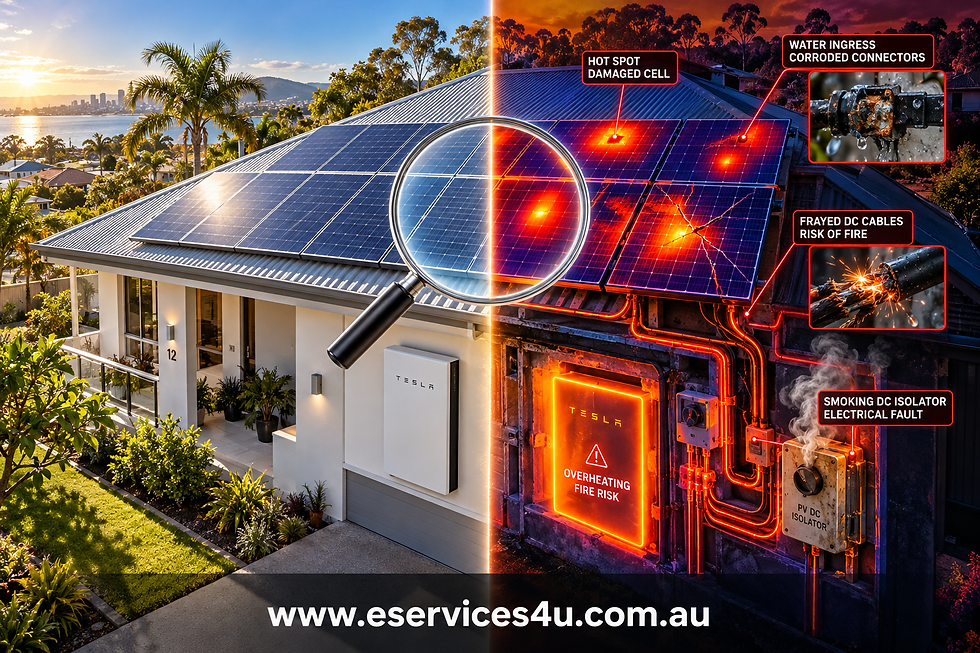
Liquid-Cooling Manifolds: Precision micro-channel liquid cooling maintains internal cell temperature differentials within $\pm 2^\circ\text{C}$, preventing localized hot spots that accelerate lithium-ion degradation during 40°C+ Western Australian summer heatwaves.
Integrated Fire Defenses: Every container features multi-point gas sniffing (off-gas VOC and CO detection), optical smoke sensors, aerosol suppression, and internal water deflagration deluge couplings to prevent thermal runaway propagation.
20-Year Bankability: Trina Storage’s 20-year performance and capacity retention warranty provides institutional lenders with the certainty required to reach final investment decision (FID).
🚀 Protect Your Energy Investment with Independent Engineering Advisory
Whether you are deploying DC-coupled utility-scale hybrids, developing commercial rooftop solar arrays, or evaluating multi-megawatt Battery Energy Storage Systems (BESS), relying solely on turn-key EPC contractors introduces serious technical and commercial risks.
At eServices4U, we act as your dedicated Owner’s Engineer and independent technical advisory firm. We do not sell hardware, execute construction contracts, or accept installer commissions—we sit exclusively on the asset owner's side of the table to protect your capital, statutory compliance, and long-term financial yield.
RPEQ & RPEV Certified Engineering: Statutory design verification, Single Line Diagram (SLD) CAD drafting, and compliance reporting under Australian Standards (AS/NZS 5033/5139/3000).
High-Voltage Grid & Substation Protection: Interface Protection System Design (IPSD), transmission interconnection reviews, harmonic resonance analysis, and secondary injection testing.
Commercial & Technical Due Diligence: Unbiased tender authoring, independent EPC quote evaluations, and pre-construction design audits that eliminate hidden contractor markups and sizing flaws.
Transparent Fixed-Fee Pricing: Clear, upfront pricing packages for commercial solar reviews, RPEQ protection designs, and ongoing Owner's Engineer project representation.
De-risk your hybrid storage investment before signing turnkey supply agreements.
🌐 Website: eservices4u.com.au
📧 Email: growthpartner@eservices4u.com.au