
Commercializing Central Queensland Wind: Why CS Energy’s $1.3B Lotus Creek Equity Sell-Down Demands Rigorous Technical Due Diligence

Queensland’s publicly owned energy strategy is entering a new phase of capital recycling. State-owned utility CS Energy has formally confirmed its engagement with the Queensland Investment Corporation (QIC) Investor Gateway to secure an equity co-investor for its flagship 285 MW Lotus Creek Wind Farm.
The announcement follows reports of advanced discussions regarding a potential equity sale of the AUD $1.3 billion asset to renewable independent power producer (IPP) Tilt Renewables.
Originally acquired by CS Energy from Danish fund manager Copenhagen Infrastructure Partners (CIP) in 2024, Lotus Creek was hailed as a benchmark 100% government-owned wind project. Sited along the Marlborough-Sarina corridor north of Rockhampton, the development features 46 Vestas wind turbines engineered to generate approximately 950,000 MWh of clean electricity annually—enough to supply 170,000 homes.
With civil balance-of-plant construction underway via Zenviron and commercial energization scheduled for 2027, bringing private equity into a state-owned mega-project highlights the commercial and engineering mechanics governing high-value renewable transactions in the National Electricity Market (NEM).
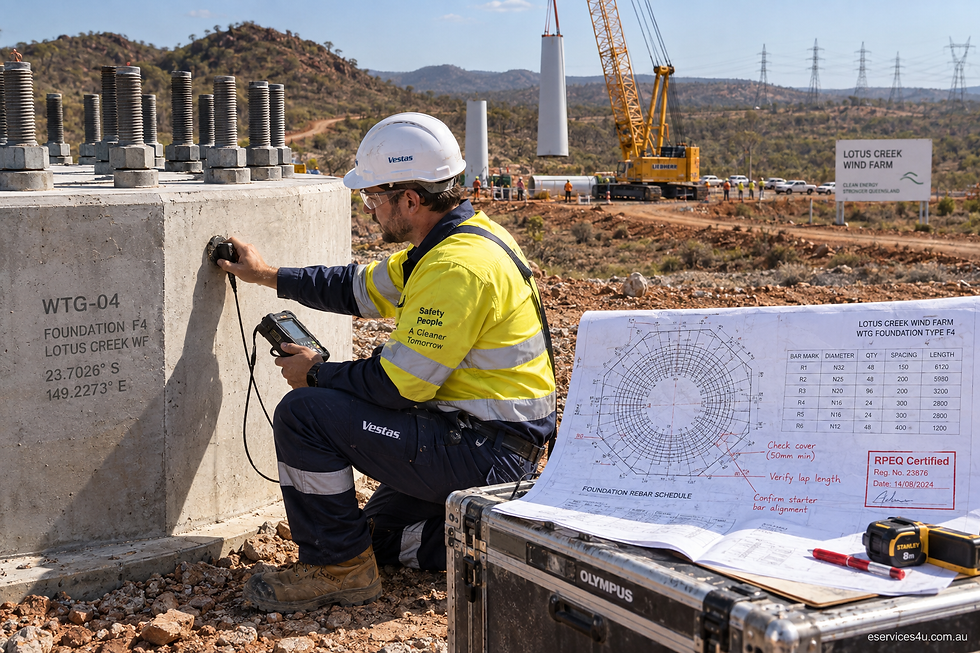
⚡ Asset Blueprint: Lotus Creek 285 MW Technical Specifications
Lotus Creek is positioned within Central Queensland’s high-resource wind belt, designed to inject bulk daytime and nocturnal generation directly into the Powerlink Queensland high-voltage transmission network.
   ┌───────────────────────────────────────────────────────────────┐
   │             LOTUS CREEK WIND FARM: ASSET PROFILE              │
   ├───────────────────────────────┬───────────────────────────────┤
   │ Total Nameplate Output        │ • 285 MW (High-Capacity Node) │
   │ Turbine Technology            │ • 46 Vestas Turbines          │
   │ Maximum Tip Height            │ • 230 Metres (High Yield)     │
   │ Projected Annual Yield        │ • 950,000 MWh / Year          │
   │ Balance of Plant Delivery     │ • Zenviron (Monadelphous/ZEM) │
   │ Interconnection Point         │ • Powerlink 275 kV Network    │
   │ Target Commercial Operation   │ • 2027 (Under Construction)   │
   └───────────────────────────────┴───────────────────────────────┘
Strategic Asset Breakdown
Technical & Financial Metric | Asset Specification | Transaction & Operational Impact |
Total Estimated CapEx | AUD $1.3 Billion | Substantial equity stake requiring multi-layered bankability audits. |
Turbine Dimensions | 46 Units / 230 m Tip Height | Heavy-lift logistics, oversize transport, and deep gravity-base foundations. |
Target Commissioning | Q3 2027 | Delivery milestone tied to Powerlink substation connection and AEMO hold points. |
Government Platform | QIC Investor Gateway | Structured conduit matching global institutional capital with state assets. |
Emissions Displacement | ~880,000 Tonnes $\text{CO}_2\text{e}$/yr | High ESG and green-financing credentials for incoming private equity. |
🔍 The M&A Engineering Hurdle: What Incoming Equity Partners Must Audit
Acquiring a significant equity interest in a partially constructed, $1.3B infrastructure asset requires moving beyond high-level financial models. For institutional infrastructure investors and developers like Tilt Renewables, technical and regulatory due diligence dictates the purchase price adjustment and risk allocation.
1. Balance-of-Plant (BOP) Geotechnical & Foundation Integrity
Siting 46 massive 230-metre-tall wind turbines across rugged Central Queensland terrain presents unique structural loads. Incoming equity partners must verify:
Mass Gravity Base Design: Auditing concrete thermal curing records, steel reinforcement densities, and rock-anchor pull-out testing to ensure foundations withstand dynamic aerodynamic overturning moments under cyclonic wind conditions.
Civil Access & Oversize Delivery Routes: Validating the road geometry, bridge loading certifications, and transport corridor easements along the Marlborough-Sarina Road to ensure logistics delays do not trigger Liquidated Damages (LDs).
2. High-Voltage Substation & 275 kV Interconnection
The 285 MW output requires a dedicated high-voltage collector substation ($33\text{ kV}/275\text{ kV}$) stepping up into Powerlink’s transmission grid.
Transformer Impedance & Earthing Design: Independent review of step-and-touch potential studies, transformer saturation curves, and protection relay coordination under AS/NZS 3000.
Secondary Injection Testing: Verifying that protection schemes, Interface Protection System Designs (IPSD), and differential protection relays have been tested to prevent inter-trip failures during network disturbances.
3. Generator Performance Standards (GPS) & System Strength
Under National Electricity Rules (NER) Clause 5.3.4A, connecting 285 MW of inverter-based wind generation into regional Queensland requires complex dynamic power system modeling:
PSCAD & PSS®E Dynamic Studies: Evaluating whether the turbine converters can withstand low-system-strength conditions and contribute synthetic inertia.
AEMO R2 Model Validation: Ensuring that as-built converter firmware matches approved simulation models, preventing costly commissioning hold-point freezes when commercial generation commences in 2027.
🏛️ The Policy Dynamic: Why Queensland Is Mobilizing the QIC Gateway
The move by CS Energy to bring private equity into Lotus Creek reflects the commercial discipline mandated by the Queensland Energy Roadmap 2025.
While state-owned corporations (CS Energy, Stanwell, and CleanCo) maintain a central role in Queensland’s energy transition, the capital expenditure required to replace retiring coal capacity and build out multi-gigawatt renewable energy zones (REZs) exceeds public balance-sheet capacity alone.
By leveraging the QIC Investor Gateway, the state can:
Recycle Government Capital: Free up state funds from late-stage construction assets to reinvest in early-stage network firming, pumped hydro, and battery projects.
Mitigate Construction Risk: Share construction cost inflation, commodity price movements, and supply chain exposure with experienced international private operators.
Preserve Public Offtake Value: Maintain statutory generation alignments while allowing specialized commercial IPPs to manage merchant market bidding and long-term asset optimization.
🚀 Protect Your Energy Investment with Independent Engineering Advisory
Whether you are conducting technical due diligence for an infrastructure equity acquisition, auditing balance-of-plant construction contracts, or developing commercial solar and storage assets, relying solely on turnkey contractor assurances exposes capital to significant risk.
At eServices4U, we act as your dedicated Owner’s Engineer and independent technical advisory team. We do not sell hardware, execute construction contracts, or broker energy assets—we sit exclusively on the investor's and asset owner's side of the table to protect capital, statutory safety, and long-term yield.
RPEQ & RPEV Certified Engineering: Statutory engineering verification, Single Line Diagram (SLD) CAD drafting, and compliance reporting across Queensland and Victoria under the Professional Engineers Act and Australian Standards (AS/NZS 3000/5033/5139).
M&A Technical Due Diligence: Comprehensive engineering audits of wind, solar, and BESS assets—evaluating geotechnical reports, civil designs, turbine warranties, and EPC contract variation risks.
High-Voltage Grid & Substation Review: Interface Protection System Design (IPSD), secondary injection test auditing, and Powerlink/DNSP grid connection negotiations.
Fixed-Fee Pricing Transparency: Upfront, fixed-cost advisory packages including Commercial Solar & Infrastructure Reviews from $495.
Ensure your clean energy acquisitions and construction assets are technically sound, statutory compliant, and fully bankable.
🌐 Website: eservices4u.com.au
📧 Email: growthpartner@eservices4u.com.au


