Solar Panel Fires in Australia: The Shocking Truth About What's Really Burning Down Homes (And How to Protect Yours Before It's Too Late)

It Started With a Faint Burning Smell at 2 AM
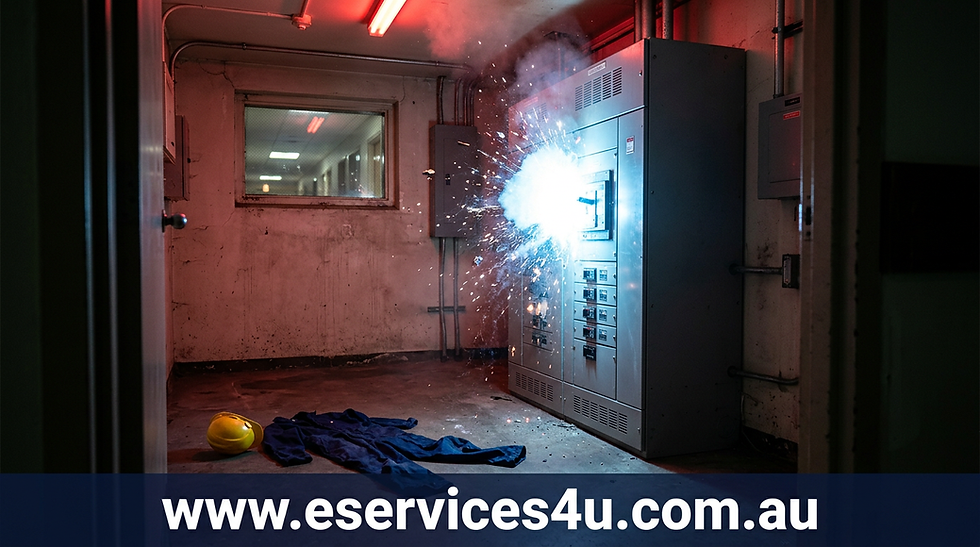
A family in Logan, Queensland woke to the acrid stench of melting plastic. By the time they reached the roof cavity, flames were already licking through the ceiling insulation. The cause? A cheap DC isolator on their three-year-old solar system that had been slowly arcing behind the scenes for months — completely invisible from the ground.
The fire destroyed their roof, their solar system, and nearly their lives.
This is not an isolated incident. It is happening right now, on rooftops across Australia, and most homeowners have absolutely no idea their solar system could be the source.
If you have solar panels on your roof — whether you live in Brisbane, Sydney, Melbourne, Perth, Adelaide, Canberra, Hobart, or Darwin — you need to read every word of this article. The information here could save your home, your family, and your life.

The Alarming Rise of Solar-Related Fires in Australia
Australia has the highest rooftop solar penetration rate in the world. Over 3.4 million homes and businesses across the country now have solar panels on their rooftops. From the leafy suburbs of Ashgrove and Indooroopilly in Brisbane to the coastal estates of Mandurah and Rockingham near Perth, from the sprawling developments of Kellyville and Marsden Park in Western Sydney to the heritage streets of North Adelaide and Unley — solar is everywhere.
And with that explosive growth has come a dark and growing problem.
The Numbers That Should Terrify Every Solar Owner
Fire and Rescue NSW has responded to a steadily increasing number of solar-related fire incidents each year since 2015, with a significant spike correlating directly with the installation boom of 2017–2020.
Queensland Fire and Emergency Services (QFES) has flagged solar installations as an emerging fire risk category, particularly in the high-growth corridors of Ipswich, Moreton Bay, Redlands, and the Gold Coast.
Metropolitan Fire Brigade (MFB/CFA) in Victoria has attended multiple rooftop fires in suburbs including Craigieburn, Werribee, Frankston, and Dandenong where solar DC components were identified as the ignition source.
South Australian Metropolitan Fire Service (SAMFS) has issued specific warnings about solar-related electrical fires in the Adelaide metropolitan area and Mount Barker region.
Department of Fire and Emergency Services (DFES) Western Australia has recorded incidents across Perth's northern suburbs (Joondalup, Wanneroo, Clarkson) and the southern corridor (Armadale, Baldivis, Rockingham).
The Australian Competition and Consumer Commission (ACCC) and Electrical Safety Office (ESO) Queensland have both issued national recalls on specific brands of DC isolators linked to fire incidents.
Industry experts estimate that up to 1 in 5 solar installations in Australia may contain at least one component that poses a genuine fire risk — and the vast majority of owners are completely unaware.
Let that sink in. One in five. If you have solar, there is a statistically significant chance that a component on your roof right now is a fire waiting to happen.
What Actually Causes Solar Panel Fires? (It's Rarely the Panels Themselves)
Here's the first thing most Australians get wrong: solar panels themselves almost never catch fire. The photovoltaic modules on your roof are made of glass, aluminium, and silicon — materials that are inherently fire-resistant.
The real danger lurks in the electrical components that connect your panels to your home — the parts you never see, never think about, and probably didn't even know existed until right now.
🔥 Cause #1: Faulty or Non-Compliant DC Isolators
This is the single biggest cause of solar fires in Australia.
DC isolators are the switches that allow you to disconnect your solar panels from the rest of the system. They are typically mounted on the roof near the panels or on the wall near the inverter.
The problem: Between 2012 and 2019, millions of cheap, non-compliant DC isolators were installed across Australia — particularly in the massive installation booms in Queensland (Sunshine Coast, Gold Coast, Toowoomba, Bundaberg), New South Wales (Western Sydney, Central Coast, Newcastle, Wollongong), and Victoria (Melbourne's outer suburbs, Geelong, Ballarat).
Many of these isolators were manufactured with substandard materials that degrade rapidly under Australian UV exposure and heat. Over time, the internal contacts corrode, the plastic housing becomes brittle, and electrical arcing begins inside the unit.
Arcing generates extreme heat — often exceeding 1,000°C — inside a plastic enclosure mounted on or near your roof. The result is predictable and devastating.
Major recalls have been issued for isolators from brands including:
PV Power
Solargen
DC Switch
Various unbranded Chinese-manufactured units
If your solar system was installed between 2012 and 2019 anywhere in Australia, there is a very high probability your DC isolator is a recalled or at-risk model.
How EServices4U protects you: Our independent fire risk audits include a complete DC isolator identification, cross-reference against national recall databases, and visual and thermal inspection of every isolator on your property. If we find a dangerous unit, we document it immediately and advise you on the fastest path to replacement. Whether you're in Caboolture, Campbelltown, Cranbourne, or Canning Vale, we identify the risk before it becomes a fire.
🔥 Cause #2: Poor DC Cabling and Connector Failures
The DC cables that run from your solar panels to your inverter carry high-voltage direct current — typically 400-600V DC on a standard residential system. This is far more dangerous than the 240V AC in your household power points.
Common cabling fire risks include:
Undersized cables — Installers who use thinner, cheaper cable than required create excessive resistance, generating heat that can melt insulation and ignite surrounding materials. We've found this in installations across Redcliffe, Penrith, Sunbury, and Ellenbrook.
Exposed or unsupported cables — DC cables that are not properly clipped and supported along the roof can chafe against metal roofing, ridge capping, or tile battens. Over time, the insulation wears through, creating a direct short-circuit path. This is extremely common in installations across coastal Queensland (Cairns, Townsville, Mackay, Hervey Bay) where wind and salt spray accelerate degradation.
Incompatible MC4 connectors — MC4 connectors are the plugs that join solar panel cables together. When installers mix connectors from different manufacturers — a practice that is shockingly common — the connections can overheat, arc, and melt. We've identified mismatched connectors in systems across Brisbane's northside, Sydney's Hills District, Melbourne's eastern suburbs, and Perth's coastal strip.
Water ingress into connections — Poorly sealed junction boxes and connectors allow rainwater to penetrate, causing corrosion, short circuits, and arcing. This is a particular problem in high-rainfall regions like Tropical North Queensland, the NSW North Coast (Lismore, Byron Bay, Coffs Harbour), and Tasmania's west coast.
Cable damage from vermin — Rats, possums, and cockatoos love chewing on DC cables. We've found extensive vermin damage to solar wiring in homes across Toowoomba, the Blue Mountains, the Adelaide Hills, and the Swan Valley.
How EServices4U protects you: Our comprehensive cable and connector inspection uses thermal imaging cameras to detect hot spots invisible to the naked eye, visual inspection of all accessible cable runs, and verification that all connectors are matched and properly sealed. We check every metre of DC cabling we can access — because one failed connection is all it takes.
🔥 Cause #3: Inverter Failures and Overheating
Your inverter is the brain of your solar system — it converts the DC electricity from your panels into the AC electricity your home uses. It's also one of the most complex and failure-prone components in the entire system.
Inverter fire risks include:
Internal component failure — Capacitors, transformers, and circuit boards inside inverters can fail due to manufacturing defects, heat stress, or age. Failed components can arc, spark, and ignite surrounding materials.
Inadequate ventilation — Inverters generate significant heat during operation. When installed in enclosed spaces — a garage in Parramatta, a laundry in Redland Bay, a narrow side passage in Subiaco, or an unventilated meter box in Morphett Vale — the ambient temperature can exceed the inverter's rated operating range, leading to thermal shutdown or, in worst cases, fire.
Incorrect installation location — Australian Standards require specific clearances around inverters for ventilation and fire safety. Installations that place inverters too close to combustible materials, gas meters, or building openings are non-compliant and dangerous.
DC arc faults inside the inverter — Loose internal connections or degraded solder joints can create DC arcs inside the inverter housing. Unlike AC arcs, DC arcs do not self-extinguish — they continue burning until the circuit is physically broken.
How EServices4U protects you: We inspect your inverter installation for compliance with AS/NZS 4777 and manufacturer specifications, verify ventilation clearances, check for error codes and fault logs, and use thermal imaging to detect abnormal heat signatures that indicate impending component failure.
🔥 Cause #4: Roof-Mounted DC Isolators in Extreme Heat
A specific and particularly dangerous configuration involves DC isolators mounted directly on the roof, exposed to full Australian sun.
On a 40°C summer day in Penrith, Gawler, or Midland, the surface temperature of a dark-coloured metal roof can exceed 70-80°C. A DC isolator mounted in that environment is operating far beyond its rated temperature range. The internal plastic components soften, the contact pressure decreases, resistance increases, and arcing begins.
This is why the Clean Energy Council and Electrical Safety Office Queensland have both recommended against roof-mounted DC isolators — yet thousands of installations across Queensland, New South Wales, Western Australia, and the Northern Territory still have them.
How EServices4U protects you: We identify all roof-mounted isolators during our inspection, assess their condition and brand against recall databases, and provide clear recommendations for relocation or replacement to a safer, shaded, wall-mounted position.
🔥 Cause #5: Battery Storage Thermal Runaway
The rapid adoption of home battery storage systems across Australia — from Tesla Powerwalls in Noosa and Mosman to BYD units in Brighton and Claremont to Sungrow and Alpha ESS systems in Springfield and Castle Hill — has introduced a new and serious fire risk category.
Lithium-ion battery fires are fundamentally different from other fires:
They burn at extremely high temperatures (up to 1,000°C+)
They produce toxic gases including hydrogen fluoride
They can reignite hours or days after being apparently extinguished
They are extremely difficult to put out with standard firefighting methods
They can trigger thermal runaway — a chain reaction where one overheating cell causes adjacent cells to overheat, creating an uncontrollable cascade
Common battery fire causes include:
Manufacturing defects in battery cells
Overcharging due to BMS (Battery Management System) failure
Physical damage from impact, water ingress, or vermin
Installation in non-compliant locations — too close to living spaces, bedrooms, or escape routes
Inadequate ventilation leading to heat accumulation
Firmware or software errors causing incorrect charge/discharge cycles
How EServices4U protects you: Our battery safety audits assess compliance with AS/NZS 5139 (the Australian Standard for battery installation safety), verify installation location and ventilation, review BMS configuration and firmware versions, and identify any signs of cell degradation or thermal stress. We provide a clear safety rating and actionable recommendations.
🔥 Cause #6: Lightning Strikes and Surge Damage
Australia has some of the most intense lightning activity in the world, particularly across Northern Queensland (Cairns, Townsville, Innisfail), the Top End (Darwin, Katherine), Central Queensland (Rockhampton, Gladstone), and the Hunter Valley (Newcastle, Maitland, Singleton).
A direct or nearby lightning strike can induce massive voltage surges through your solar array, instantly destroying panels, inverters, isolators, and cabling. The resulting damage can create immediate fire risks or latent defects that develop into fire hazards weeks or months later.
How EServices4U protects you: We assess your system's surge protection and earthing configuration, verify compliance with AS/NZS 1768 (Lightning Protection), and recommend upgrades where protection is inadequate. Post-storm, we provide rapid damage assessments and insurance documentation.
The 7 Warning Signs Your Solar System Could Be a Fire Risk
Most solar fires don't happen suddenly without warning. There are almost always signs — if you know what to look for.
⚠️ Warning Sign #1: A Burning or Melting Plastic Smell Near Your Inverter or Roof Cavity
If you ever smell burning plastic, rubber, or electrical components near your inverter, switchboard, or in the ceiling space beneath your solar panels, do not ignore it. This is the most direct warning sign of arcing or overheating components.
Action: Turn off your solar system at the AC and DC isolators immediately and call a qualified electrical inspector.
Contact EServices4U for an urgent independent assessment.
⚠️ Warning Sign #2: Discolouration, Melting, or Scorching on Your Inverter or Isolators
Check the face of your inverter and any visible DC isolators for brown or black discolouration, melted plastic, or scorch marks. These are clear signs of overheating.
Action: Do not touch the affected component. Photograph it from a safe distance and contact EServices4U immediately.
⚠️ Warning Sign #3: Crackling, Buzzing, or Hissing Sounds From Your Roof or Inverter
Solar systems should be virtually silent. If you hear crackling, buzzing, or hissing — particularly from the roof area or near the inverter — this may indicate electrical arcing.
Action: Switch off the system and arrange an urgent inspection.
⚠️ Warning Sign #4: Frequent Inverter Error Codes or Shutdowns
If your inverter is regularly displaying fault codes, shutting down unexpectedly, or failing to start in the morning, this may indicate internal component degradation that could escalate to a fire risk.
Action: Record the error codes and contact EServices4U for an independent diagnostic assessment.
⚠️ Warning Sign #5: Sudden, Unexplained Drop in Solar Production
If your monitoring app shows a sudden drop in energy production that cannot be explained by weather or shading, this may indicate a failed string, damaged cable, or degraded connection — any of which can be fire precursors.
Action: Book an independent system health check with EServices4U.
⚠️ Warning Sign #6: Visible Damage to Cables or Connectors on Your Roof
If you can safely see your roof from the ground or a window, look for dangling cables, cracked connectors, or panels that appear to have shifted. Storm damage, vermin activity, and UV degradation can all compromise the electrical integrity of your system.
Action: Do not climb onto the roof yourself. Contact E Services 4U for a professional inspection.
⚠️ Warning Sign #7: Your System Was Installed Between 2012 and 2019
If your solar system was installed during this period, there is a statistically high probability that it contains components — particularly DC isolators — that have since been recalled or identified as fire risks.
Action: Regardless of whether you've noticed any problems, book a comprehensive fire risk audit with E Services 4U immediately. The absence of visible symptoms does not mean the absence of danger.
Why Your Installer's "Check-Up" Is Not Enough
Many homeowners assume that if their original installer offers a "free system check-up," they're covered. Here's why that assumption is dangerous:
Conflict of interest: Your installer installed the system. They have a financial and reputational incentive to tell you everything is fine — even when it isn't. Admitting to installation defects opens them up to liability, warranty claims, and potential legal action.
Scope limitations: Most installer "check-ups" are superficial visual inspections that take 15-20 minutes. They rarely include thermal imaging, I-V curve testing, detailed cable inspections, or isolator recall cross-referencing.
No independent documentation: If a fire does occur, an inspection report from the original installer carries far less weight with insurance companies and courts than an independent assessment from a qualified third-party engineer.
They may no longer be qualified: The solar industry has high installer turnover. The person who "checks" your system may not have the same qualifications or experience as the person who installed it.
This is exactly why you need an independent Owner's Engineer.
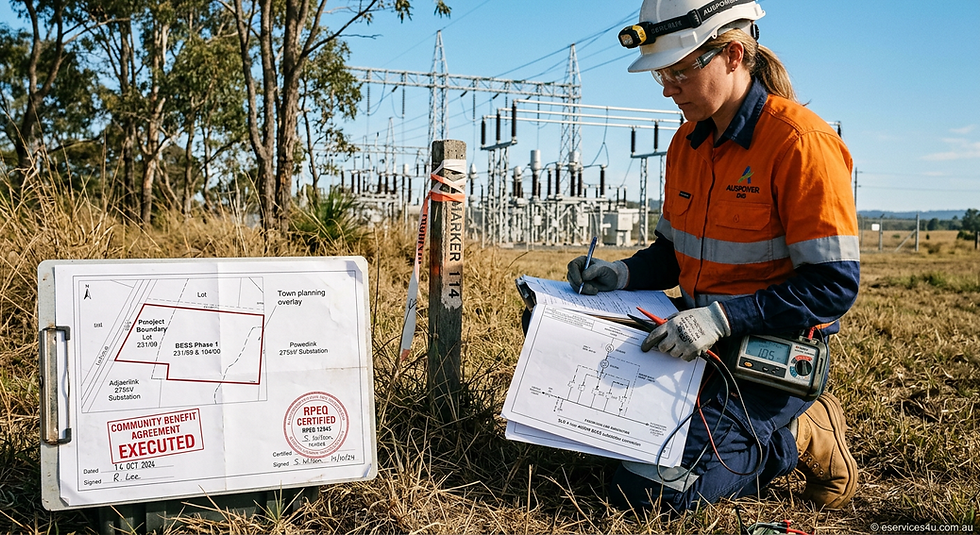
At EServices 4U, we have zero connection to your installer, your panel manufacturer, your inverter brand, or your battery supplier. We work exclusively for you. Our fire risk assessments are thorough, technically rigorous, independently documented, and designed to give you — and your insurance company — complete confidence in the safety of your system.
What an EServices4U Solar Fire Risk Audit Includes
When you book an independent solar fire risk audit with EServices4U, our qualified engineers conduct a comprehensive assessment that includes:
✅ Complete DC isolator identification and recall database cross-reference
✅ Thermal imaging scan of all accessible panels, cables, connectors, isolators, and inverter
✅ Visual inspection of all DC cabling runs for damage, degradation, and compliance
✅ MC4 connector compatibility and sealing verification
✅ Inverter installation compliance check against AS/NZS 4777
✅ Earthing and surge protection assessment
✅ Battery storage safety audit (if applicable) against AS/NZS 5139
✅ Roof penetration and waterproofing inspection
✅ Monitoring system verification and performance baseline check
✅ Comprehensive written report with photographic evidence and risk ratings
✅ Prioritised action plan with cost estimates for any required remediation
✅ Insurance-ready documentation for claims or premium negotiations
This is not a 15-minute visual glance. This is a forensic-level technical assessment of every component that could potentially cause a fire on your property.
What Should You Do Right Now?
If you have solar panels on your roof — anywhere in Australia — here is your immediate action plan:
Step 1: Check Your DC Isolators
Look at the isolator switches near your inverter and on your roof (if visible from the ground). Note the brand name and model number. Search the ACCC Product Safety Australia website (productsafety.gov.au) to check if they've been recalled.
Step 2: Review Your Installation Date
If your system was installed between 2012 and 2019, treat it as high priority for an independent inspection regardless of apparent condition.
Step 3: Check Your Monitoring Data
Log into your solar monitoring app or portal. Is your system producing the expected amount of energy for this time of year? Any sudden drops or unexplained fluctuations?
Step 4: Look and Listen
Walk around your home. Can you hear any buzzing or crackling from the roof or inverter area? Can you see any damaged cables, discoloured components, or scorch marks?
Step 5: Book an Independent Fire Risk Audit
This is the single most important step. Don't rely on your installer. Don't rely on hope. Get an independent, qualified, technically rigorous assessment from an Owner's Engineer who works only for you.
The Cost of Inaction vs. The Cost of Protection
Let's put this in perspective:
Scenario | Cost |
Independent solar fire risk audit by EServices4U | A few hundred dollars |
Replacing a faulty DC isolator | $200–$500 |
Repairing damaged DC cabling | $500–$1,500 |
Replacing a failed inverter | $1,500–$4,000 |
Replacing a battery after thermal event | $8,000–$15,000 |
Repairing fire damage to your roof | $20,000–$80,000 |
Rebuilding your home after a solar fire | $200,000–$500,000+ |
The cost to your family's safety | Priceless |
The math is simple. The choice is yours.
Frequently Asked Questions
Q: Are solar panels themselves a fire risk?
A: No. Solar panels are made of fire-resistant materials (glass, aluminium, silicon). The fire risk comes from the electrical components — isolators, cables, connectors, and inverters — not the panels themselves.
Q: How often should I have my solar system inspected for fire risk?
A: We recommend an independent fire risk audit at least once every 2-3 years, and immediately after any severe weather event (hailstorm, cyclone, lightning strike). Systems installed between 2012-2019 should be inspected annually until all at-risk components have been replaced.
Q: Will my home insurance cover a solar fire?
A: Most Australian home insurance policies cover fire damage regardless of cause. However, insurers may deny claims if they can prove the system was non-compliant or that the owner was aware of defects and failed to act. An independent inspection report from EServices4U strengthens your insurance position significantly.
Q: Can I inspect my own solar system for fire risks?
A: You can perform basic visual checks from the ground (looking for damaged cables, discoloured components, scorch marks). However, do not climb onto your roof or open electrical enclosures. Many fire risks — including internal arcing, hot spots, and degraded connections — are invisible without thermal imaging and professional testing equipment.
Q: My installer says my system is fine. Should I still get an independent check?
A: Yes. Your installer has a conflict of interest. An independent Owner's Engineer like EServices4U works only for you and has no incentive to hide problems. Think of it like getting a second medical opinion — it's not about distrusting your installer, it about protecting your family.
Q: Do you service my area?
A: E Services 4U is based in Queensland and serves all of Australia — including every state, territory, and region. Whether you're in Cairns or Canberra, Perth or Port Macquarie, Darwin or Devonport, we can help.
Q: How quickly can you inspect my system?
A: We understand the urgency of fire risk concerns. For high-priority cases (active warning signs, recalled components, post-storm damage), we aim to schedule inspections within 5-10 business days in metropolitan areas and 10-15 business days in regional locations.
Don't Wait Until It's Too Late
Every day that a faulty DC isolator arcs on your roof, every day that a degraded cable chafes against your roofing, every day that an overheating inverter sits in an unventilated space — is a day you're gambling with your home and your family's safety.
Solar energy is one of the greatest investments Australian homeowners and businesses can make. But like any electrical system, it requires proper installation, regular maintenance, and independent oversight to remain safe.
You wouldn't drive a car without a roadworthy certificate. You wouldn't buy a house without a building inspection. Don't leave the most powerful electrical system on your property to chance.
Contact EServices4U Today — Before the Warning Signs Become a Tragedy
🔗 Visit: www.eservices4u.com.au
📞 Call us to discuss your solar fire risk concerns
📧 Book your independent solar fire risk audit online - Click Here
EServices 4U — Your Independent Owner's Engineer. Protecting Australian homes and businesses from solar fire risks, coast to coast.
Independent. Expert. On your side. Because your family's safety is not something you should leave to the company that installed the system.