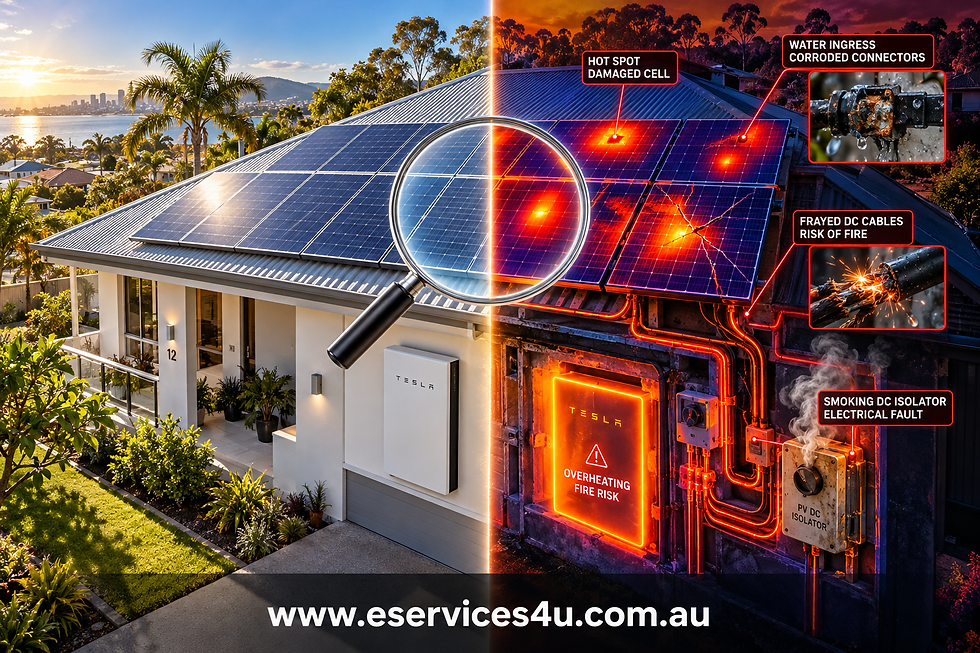
Navigating Energex & Ergon Grid Updates 2026: Dual-Occupancy Rules & The New STNW3522 Large Customer Standard

As Queensland's electricity grid rapidly evolves to accommodate a massive influx of Consumer Energy Resources (CER) like solar and battery storage, local Distribution Network Service Providers (DNSPs)—Energex and Ergon Energy Network—are tightening their technical connection requirements.
In July 2026, two critical updates were released that directly impact how new projects are designed, approved, and connected to the grid. Whether you are developing a residential duplex or engineering a multi-megawatt commercial facility, failing to adhere to these new rules will result in defect notices, costly redesigns, and severe project delays.
Here is an informative breakdown of the latest dual-occupancy connection rules, the newly released Large Customer Connection Standard (STNW3522 Version 4), and how these changes will affect developers, electrical contractors, and commercial asset managers across Queensland.
🏘️ 1. Clarification on 2-Phase and Split-Phase Connections for Dual Occupancy
Energex and Ergon Energy have issued a strict clarification regarding the conditions under which a dual-phase (2-phase or split-phase) Point of Supply will be permitted for dual-occupancy arrangements.
As urban infill development increases, many developers attempt to connect multiple dwellings to a single supply point. The updated guidelines explicitly restrict dual-phase DNSP service point connections to very specific criteria.
The Qualifying Criteria
To qualify for a dual-phase connection, the site must meet all of the following conditions:
Exactly two dwellings and two customers (as defined by the QECM).
Both dwellings must be residential or domestic. (Note: Boarding houses, guest houses, and hostels are strictly excluded).
The dwellings must share the same lot of land or fall under a 2-Lot Community Title arrangement (e.g., sharing a common driveway).
Each individual dwelling must operate on single-phase power.
The development must have formal Development Approval (DA), Material Change of Use (MCU), or Building Approval from the local council classifying it as a duplex, dual-occupancy, or primary dwelling with a secondary dwelling (e.g., a granny flat).
(Note: Terrace housing, where abutting structures sit on separate freehold lots, does not qualify. These require one DNSP service point and one main switchboard per lot).
Metering and Equipment Requirements
For sites that qualify, the meters for both dwellings must be installed in a common meter board. To prevent defect notices, this panel must meet a minimum size of 480 (H) x 460 (W) mm, satisfying Clause 9.3.3(2) of the Metering Installation Requirements (MIR v2.1) where future upgrades are unlikely.
⚠️ The Solar and Battery Risk: Neutral Current Overload
One of the most critical warnings in this update relates to Distributed Energy Resources (DER) like rooftop solar PV and home batteries.
When you have a 2-phase or split-phase supply across two dwellings, one dwelling might be heavily importing electricity from the grid while the other is heavily exporting solar power. This imbalance can cause the consumer mains neutral current to exceed the active currents.
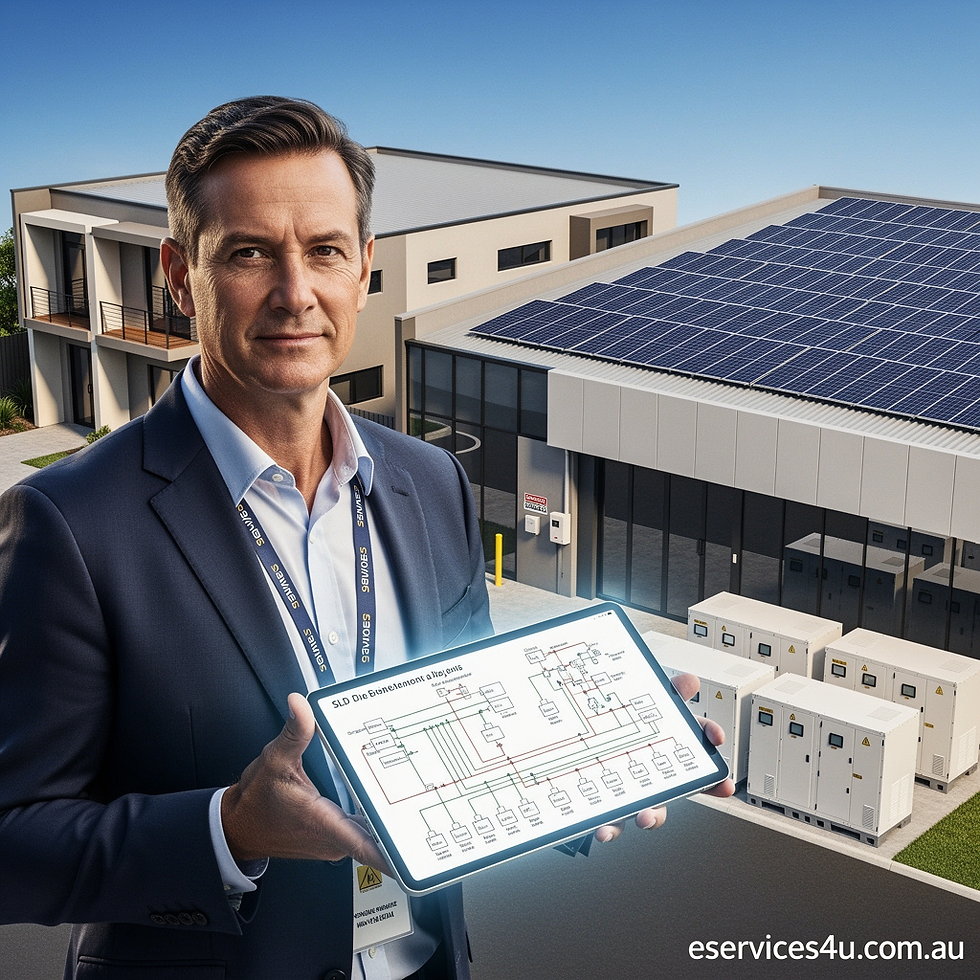
How EServices4U Can Help: Navigating load balancing and embedded generation on split-phase systems requires precise electrical engineering. As your independent technical advisor, EServices4U can review your initial Single Line Diagrams (SLDs) and load profiles before they are submitted to Energex. While you aren't obligated to use our advisory, having an expert catch potential neutral current overloads early ensures your dual-occupancy project isn't hit with unexpected network upgrade costs or safety defect notices.
🏭 2. STNW3522 Version 4 Released: The New Standard for Large Customers
For commercial, industrial, and large-scale renewable projects, Energex and Ergon Energy have officially released Version 4 of the STNW3522 Standard.
First and foremost, the terminology has officially changed: what was formerly known as "Major Customer Connections" is now aligned with national Connection Policy as "Large Customer Connections."
Who Does STNW3522 Apply To?
This standard is the rulebook for:
Commercial premises with a requested capacity greater than 1,000 kVA (1 MVA).
Distribution Connected Units (solar, batteries, or hybrid DER systems) with an installed capacity greater than 30 kVA.
Real estate developments and Embedded Networks.
The Transition Period (Act Fast)
Version 4 came into effect on 13 July 2026.
To support the industry, the DNSPs have provided a brief transition window. Any connection agreement or project submitted between 13 July 2026 and 18 October 2026 can be assessed under either Version 2 or Version 4 (Note: Version 3 was never released to the public). However, you cannot mix requirements—your project must adhere entirely to one version.
From 19 October 2026, all new projects must strictly comply with Version 4.
Key Technical Updates to Watch
If you are planning a large commercial solar array, BESS (Battery Energy Storage System), or a high-demand facility, Version 4 introduces stringent new technical baseline requirements:
Grid Disconnection Devices (GDD): Formerly known as Grid Isolation Devices (GID), the rules around GDDs have been tightened. For example, any DER system over 1.5 MVA connected to the HV network absolutely requires a DNSP-owned GDD to allow the network to rapidly disconnect the site during grid emergencies.
Harmonic Modeling: With the rise of inverter-based technologies, strict power quality (PQ) limits are enforced. DER systems over 5 MVA must provide harmonic modeling prior to agreement. Systems ≥ 1.5 MVA are highly recommended to perform modeling to avoid post-connection mitigation costs.
N-1 Protection Redundancy: A Registered Professional Engineer of Queensland (RPEQ) must certify that your protection system has sufficient redundancy (N-1) to safely clear faults even if a single protection element fails.
Cybersecurity & SCADA: For sites requiring DNP3 SCADA communications, strict new cybersecurity rules apply. All IP traffic between the customer and the DNSP must transit through approved "Edge Defence" firewall devices with continuous deep packet inspection.
🚀 Why Independent Engineering Oversight is Now Essential
These updates from Energex and Ergon Energy are not just administrative tweaks; they represent a fundamental shift toward a highly regulated, technically complex grid.
For property developers, electrical contractors, and commercial asset managers, the margin for error has vanished. Submitting a non-compliant connection application under the new STNW3522 v4 framework will result in immediate rejections, stalling your project and tying up your capital.
This is where EServices4U becomes an invaluable asset to your project lifecycle.
We operate as an independent Owner’s Engineer and commercial energy consultancy. We don't sell solar panels or pour concrete. Our sole focus is protecting your financial and technical interests.
While you can navigate these DNSP applications on your own, having EServices4U on your side provides distinct advantages:
Pre-Feasibility Audits: We use advanced modeling (like OpenSolar) and RPEQ-aligned design reviews to ensure your proposed loads and embedded generation comply perfectly with the new Version 4 standards.
Grid Compliance: We scrutinize your Single Line Diagrams (SLDs), Protection Schemes, and harmonic modeling reports before submission, ensuring seamless integration with Energex/Ergon networks.
Fixed-Fee Transparency: We operate on transparent, fixed-fee pricing tables, meaning you get elite technical advisory without unpredictable consulting costs.
You aren't forced to use an Owner's Engineer, but as the Queensland grid becomes stricter, having an independent expert audit your designs is the smartest way to de-risk your investment and accelerate your approvals.
Don't let complex grid rules stall your project. Let EServices4U engineer your compliance today.
🌐 Website: eservices4u.com.au
📧 Email: growthpartner@eservices4u.com.au