The End of an Era: What Lily D’Ambrosio’s Resignation Means for Victoria’s Energy Transition

In a massive shake-up for the Australian renewable energy sector, Victoria’s longest-serving Minister for Climate Action, Energy and Resources, Lily D’Ambrosio, has officially announced her resignation.
Stepping down from the Cabinet and confirming she will not re-contest the seat of Mill Park in the upcoming November election, D’Ambrosio’s departure comes amid significant political turmoil for the Victorian Labor Party following the resignation of former premier Jacinta Allan.
For the past 12 years, D’Ambrosio has been the architect of some of the most aggressive and consequential decarbonization policies in the country. For commercial energy buyers, developers, and asset managers, her exit marks a critical pivot point in Victoria’s energy roadmap.
⚡ The D'Ambrosio Legacy: From Brown Coal to 45% Renewables
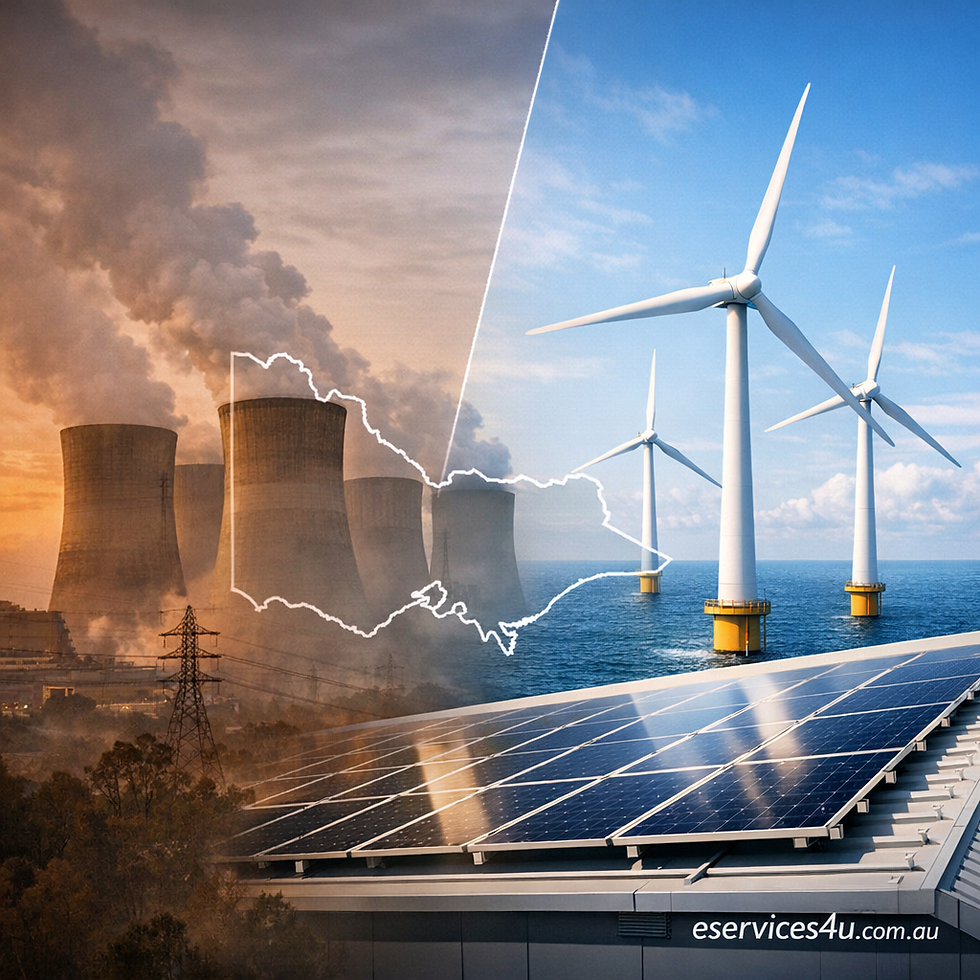
When D'Ambrosio took the energy portfolio in 2014, Victoria operated the dirtiest power system in the country, deeply reliant on aging brown coal generators in the Latrobe Valley, with renewables sitting at a mere 11% of the energy mix.
Today, that figure has skyrocketed to approximately 45%.
She engineered a massive structural shift in how the state generates and consumes power. Her flagship policies have not only shaped Victoria but have frequently set the precedent for the rest of the National Electricity Market (NEM).
Key Policy Achievements
Policy Initiative | The Market Impact |
Coal Closure & Just Transition | Managed the rapid closure of the Hazelwood coal plant and established Australia’s first Just Transition framework, forcing the market to prepare for a post-coal grid. |
Electrification & Gas Exit | Legislated the progressive phase-out of gas connections in new homes, triggering a massive shift toward residential and commercial electrification. |
The SEC Revival | Re-established the State Electricity Commission to drive public investment directly into renewable generation and energy sector jobs. |
Renewable Targets | Delivered aggressive, legislated renewable energy targets that have attracted an estimated $13 billion in approved clean energy investments since 2024. |
"In under 12 years, D’Ambrosio has driven pollution down and bills down... This is testament to strong, sound policy and the power of staying the course," noted Jono La Nauze, CEO of Environment Victoria.
🏗️ The Offshore Wind Question: A Critical Juncture
While D'Ambrosio’s legacy in onshore renewables is cemented, her departure comes at a highly sensitive time for Victoria's nascent offshore wind sector.
The minister was scheduled to launch the nation’s first-ever auction for 2 gigawatts (GW) of offshore wind generation capacity in August. This sector is already facing massive headwinds, including severe cost blowouts, complex supply chain logistics, and environmental opposition.
In her resignation statement, D’Ambrosio sought to reassure the market: "With our first offshore wind auction set to launch in August and Victoria now well placed to manage any further disruption to global fuel markets, I have decided that it is time to step back... Offshore wind is crucial to Victoria’s energy reliability and affordability."
However, as Climate Energy Finance director Tim Buckley noted, her departure provides the new government with a "fresh set of eyes" to potentially re-evaluate the offshore wind roadmap and the costly delays currently plaguing Greenfield transmission grid proposals.
📍 Navigating the Policy Shift: Advice for Commercial Operators
The resignation of a defining energy minister inevitably creates a period of policy uncertainty. As the Victorian government reshuffles its cabinet under new Premier Ben Carroll ahead of the November election, large-scale utility developers may face temporary regulatory hesitation.
However, for commercial property managers and industrial energy users, the underlying market fundamentals remain unchanged.
Wholesale Volatility: As the state continues to manage the retirement of brown coal generators (like Yallourn in 2028), the grid will experience tightening supply constraints during peak periods.
The Commercial Mandate: You cannot rely on state policy to guarantee your operational energy costs. The most effective hedge against political and grid uncertainty is deploying localized, Behind-the-Meter (BTM) commercial solar and battery storage.
🚀 Secure Your Energy Future with EServices4U
The political landscape is shifting, but your commercial energy strategy requires absolute stability.
At EServices4U, we operate as your independent Owner's Engineer, providing elite technical and commercial advisory across Australia. We navigate complex grid compliance, audit technical designs using advanced OpenSolar modeling, and provide strict financial oversight to ensure your clean energy investments deliver maximum ROI, regardless of who holds the energy portfolio.
Don't let policy uncertainty dictate your bottom line. Let's engineer your commercial independence today.
🌐 Website: eservices4u.com.au
📧 Email: growthpartner@eservices4u.com.au