No More Court Delays: How NSW is Fast-Tracking 2.7GW of Major Wind Projects

Hey there, energy innovators and investors. If you’ve been navigating the Australian renewable energy sector for as long as I have, you know that the biggest hurdle isn't the technology or the funding—it's the red tape.
Recently, New South Wales Planning Minister Paul Scully made a game-changing move to accelerate the state’s energy transition. In a historic first for the renewables sector, the NSW government has officially shut the door on post-approval legal challenges for three massive wind projects.
How? By directing them through a specialized "public hearing" process at the NSW Independent Planning Commission (IPC). Let's break down what this means for
developers, investors, and the future of clean energy in Australia.
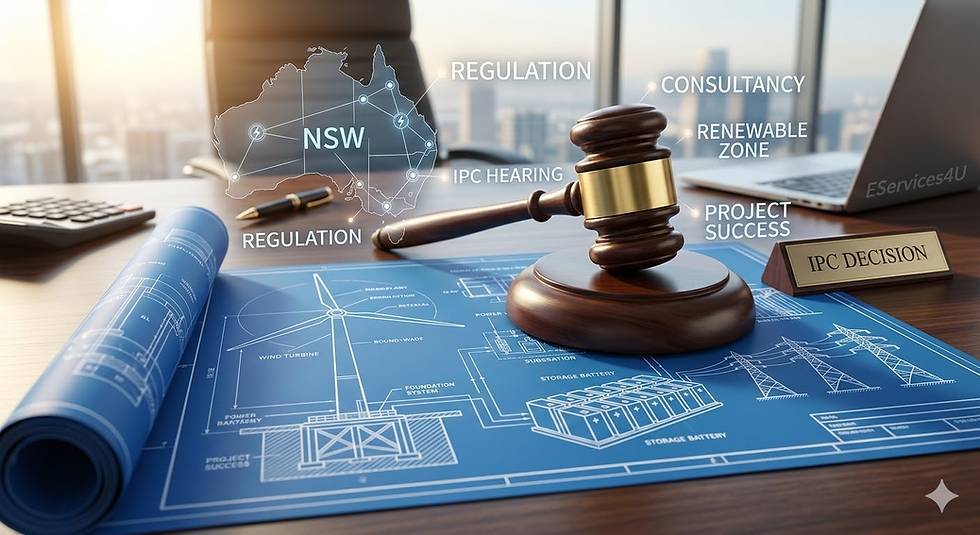
The 3 Mega Wind Projects in the Spotlight
This ruling directly impacts three critical developments that together represent over 2.7GW of clean energy capacity—enough to power hundreds of thousands of homes and solidify the state's Renewable Energy Zones (REZ):
Dinawan Wind Project: A 1.2GW powerhouse.
Bullawah Wind Project: 815MW of critical capacity.
Winterbourne Wind Project: 732MW wind paired with a massive 359MW / 718MWh battery system.
With major players like Spark Renewables, Edify Energy, and Vestas behind these developments, this decision provides the ultimate currency for large infrastructure: investment certainty.
The "Public Hearing" Loophole: Explained
Normally, when an NSW project gets over 50 objections (even anonymous ones from outside the region), it triggers an IPC public meeting. Community feedback is taken, but crucially, opponents can still drag the approved project into the Land and Environment Court for years of costly "merit appeals."
Under the newly triggered public hearing process:
✔ Community voices and submissions are still rigorously heard.
✔ Witnesses can be thoroughly cross-examined.
✔ The IPC has the power to compel testimony.
❌ No further merit appeals are allowed in court once the final decision is handed down.
Why NSW is Tightening the Process Now
We've seen major developments like the Valley of the Winds and Hills of Gold projects bogged down in years of post-approval litigation. Recent industry surveys reveal that NSW planning approvals have historically been a massive source of delay, sometimes taking longer than federal EPBC reviews. For developers, these holding patterns can push project costs up by tens of millions.
With legacy coal plants like Eraring relying on temporary extensions until 2027, NSW has to deploy replacement generation rapidly. Endless court battles over non-local objections simply don't align with the urgent need to keep the grid stable and hit our emissions targets. This bold IPC move is a clear signal: NSW is prioritizing faster clean energy deployment while maintaining proper environmental scrutiny.
What This Means for Your Next Project
This regulatory shift is a massive win for renewable energy procurement in Australia, but the planning landscape remains highly complex. From navigating the newly updated NSW Renewable Energy Planning Framework to locking in a viable grid connection, you need a strategy that anticipates roadblocks before they happen.
That’s where expert guidance makes the difference.
At EServices4U, we specialize in helping energy developers and investors turn ambitious blueprints into operational, profitable assets. We provide top-tier consulting across Australia for:
Renewable project feasibility studies
Grid connection and transmission strategy
Regulatory and planning advisory
Renewable energy procurement and PPAs
Solar, wind, and BESS (battery) project consulting
Don't let regulatory bottlenecks stall your ROI. Partner with experts who know how to make policy and planning work for you to gain viewers, generate leads, and drive profit.
🌐 Visit us: www.eservices4u.com.au 📧 Let’s talk strategy: growthpartner@eservices4u.com.au
Clean energy projects succeed when technology, planning, and policy move together. Let's build the future of Australia's grid, today.